24 Hour Home Care for Seniors: Costs, Options, Setup
24 hour home care explained: live-in vs. round-the-clock shifts, who needs it, how to arrange it, and how to book a free care assessment today.

24 hour home care is round-the-clock, non-medical support that lets an older adult stay safely in their own home, day and night. For many Puget Sound families, it brings peace of mind when a loved one can no longer be alone. This guide explains the options, who benefits, and how to set it up.
Quick answer: 24 hour home care means a caregiver is available at all hours, either through a live-in caregiver or rotating shifts. It covers personal care, meals, medication reminders, mobility help, and companionship, but not skilled medical treatment.
Evening companionship is a key part of 24 hour home care.
What Is 24 Hour Home Care?
It is continuous in-home support from trained caregivers. Someone is present to help with daily tasks, keep your loved one safe, and offer company at any hour.
Importantly, this care is non-medical. Caregivers help with bathing, dressing, grooming, toileting, meals, and reminders. Skilled medical treatment is outside the scope of this service.
Live-In Care vs. Round-the-Clock Shifts
Families often use these terms interchangeably. However, they work differently, and the right choice depends on nighttime needs.
| Feature | Live-in care | Shift-based 24/7 care |
|---|---|---|
| Caregiver setup | One caregiver stays in the home | Caregivers rotate in shifts |
| Overnight | Sleep break, available if needed | Awake caregiver all night |
| Best for | Occasional nighttime help | Frequent nighttime needs or wandering |
Who Benefits From Round-the-Clock Care?
Constant support suits people who are unsafe alone for long stretches. For example, it can help when a loved one:
- Has Alzheimer's, dementia, or another memory disorder
- Is at high risk of falls or needs help moving at night
- Is bed-ridden or living with Parkinson's disease or arthritis
- Needs help with toileting or incontinence care overnight
According to the CDC, falls are a leading cause of injury among older adults, which is why overnight supervision matters for many families.
What a Caregiver Does Day and Night
Daytime care centers on routines. Caregivers help with personal care, light housekeeping, laundry, grocery shopping, and meal preparation. They also give medication reminders and provide transportation to appointments.
At night, the focus shifts to safety and comfort. Caregivers assist with bathroom trips, repositioning, and reassurance during restless hours. As a result, family members can rest more easily too.
24 Hour Care for Memory Loss
Memory conditions often disrupt sleep and increase confusion in the evening. A familiar caregiver in a familiar home can provide steady routines and calm support. Learn more about in-home care for seniors and how plans are tailored to each person.
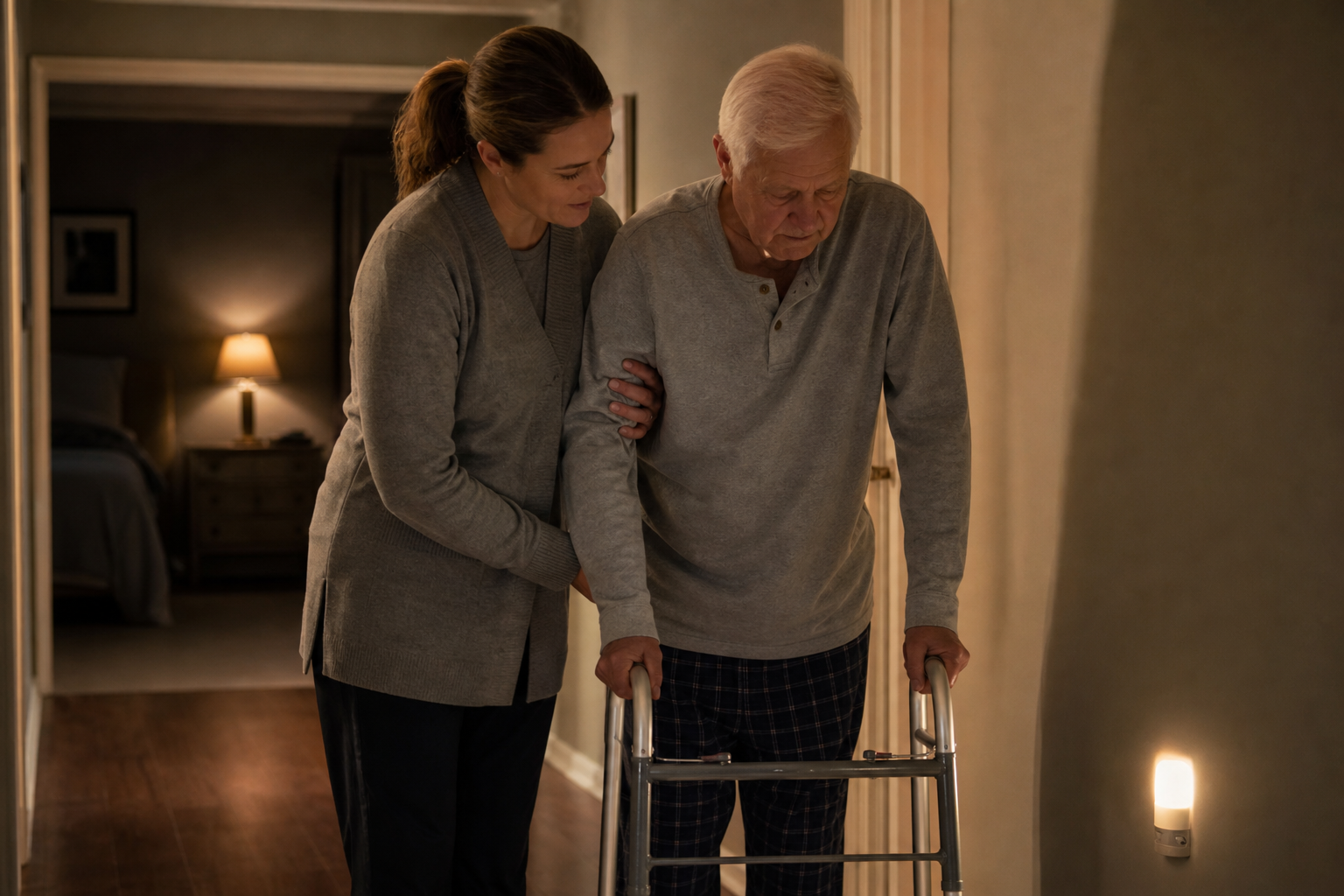
Overnight caregivers help with safe mobility and reassurance.
How to Arrange Around-the-Clock Care
- List daytime and nighttime needs, including toileting, wandering, and fall risks.
- Choose the care model: live-in or awake overnight shifts.
- Schedule a free, no-obligation care assessment.
- Review the personalized care plan with your family.
- Start care and adjust as needs change.
Paying for Continuous Home Care
Original Medicare generally does not pay for long-term custodial care at home. You can confirm current rules at Medicare.gov. Many families use private funds, long-term care insurance, or other benefits.
Because costs vary with hours and needs, a personal assessment gives the clearest estimate.
Local Options Across the Puget Sound
Comfort At Home Homecare is a non-medical agency based in Edmonds, WA. It serves King, Snohomish, Pierce, and Kitsap counties, with 24/7 and live-in care available when needed. Families in the South Sound can see the Tacoma location page. Eastside families may enjoy reading about care in Bellevue.
Each plan is personalized, and families stay involved. The team's core values are independence, human connection, and comfort.
Ready to talk? Schedule a free, no-obligation care assessment or call (206) 258-6848.
Frequently Asked Questions
What is 24 hour home care?
It is non-medical support available around the clock in a person's own home. It covers day and night needs through live-in or shift-based caregivers.
Is 24 hour home care the same as live-in care?
Not exactly. Live-in care places one caregiver in the home who gets a sleep break, while 24 hour care often uses rotating shifts so someone is always awake.
Who needs round-the-clock care?
People who cannot safely be alone, such as those with advanced dementia, high fall risk, or limited mobility, often benefit most.
Can 24 hour home care help with dementia?
Yes. Constant supervision can reduce wandering risks and provide calm routines for people with Alzheimer's or other memory disorders.
Does Comfort At Home Homecare offer 24/7 care?
Yes. The agency offers 24/7 care when needed, along with live-in, visiting, and adult day care options.
Do caregivers provide medical care?
No. Care is non-medical, covering personal care, meals, medication reminders, mobility help, and companionship.
Will Medicare pay for 24 hour home care?
Original Medicare generally does not cover long-term custodial care at home. Check Medicare.gov and ask about long-term care insurance or other funding.
How much does 24 hour home care cost?
Cost depends on hours, care needs, and the care model. A free assessment is the best way to get a quote for your situation.
How quickly can care start?
Timing depends on the schedule and caregiver availability. Call (206) 258-6848 to discuss your timeline.
Which areas are served?
The agency serves King, Snohomish, Pierce, and Kitsap counties, including Seattle, Tacoma, Bellevue, and Edmonds.
What are common mistakes when arranging round-the-clock care?
Common mistakes include underestimating nighttime needs, skipping family input, and not revisiting the plan as needs change.
Can care happen outside a private home?
Yes. Care can be delivered in private homes, retirement communities, and assisted living settings.
Conclusion
24 hour home care gives seniors safety, dignity, and companionship at every hour, while giving families real rest. Start by mapping nighttime needs, choosing between live-in and shift care, and reviewing a personalized plan. To explore your options, schedule a free care assessment with Comfort At Home Homecare or call (206) 258-6848.
