Aged Care at Home: Options for Seniors in Puget Sound
Aged care explained: compare in-home care, live-in care and memory care options for seniors in Puget Sound. Schedule a free care assessment today.

Aged care at home helps older adults stay safe, comfortable and independent in the place they know best. For many Puget Sound families, it means a caring, trained professional steps in to help with daily life. This guide explains the services, costs, funding options and steps to start, so you can decide with confidence.
Quick answer: Aged care at home means caregivers help with bathing, dressing, meals, medication reminders, rides and companionship. It is non-medical. Most agencies, including Comfort At Home Homecare, begin with a free assessment to build a personalized plan.
Companionship is a core part of aged care at home.
What Is Aged Care at Home?
Aged care is ongoing assistance for older adults who need help with everyday life. It can range from a few hours of visiting care each week to round-the-clock support. At home, it adapts as needs change.
The term is used differently around the world. In the United States, families more often say "senior care," "elder care" or "long-term care." However, the goal is the same: protect independence while meeting real needs with respect.
Non-Medical Care vs. Skilled Medical Care
Non-medical care supports daily living and companionship. Skilled care, such as wound treatment or injections, is delivered by licensed clinicians. Some families use both. For example, a nurse may visit weekly while a caregiver helps every day.
Types of In-Home Senior Care Services
Home-based support is flexible. Therefore, families can add or reduce services as needs change. Common options include:
- Visiting care: scheduled visits for a few hours at a time.
- Live-in and 24/7 care: a caregiver present for extended or round-the-clock support.
- Personal care: bathing, dressing, grooming, toileting, incontinence care and fall prevention.
- Homemaking and meals: light housekeeping, laundry, grocery shopping and meal preparation.
- Medication reminders: timely prompts so doses are not missed.
- Transportation: rides to medical appointments and errands.
- Companion care: conversation, activities and a friendly presence.
- Respite care: short-term relief so family caregivers can rest.
You can see the full range on the home care services page or read about homecare for seniors.
Support for Family Caregivers
Family caregivers carry a heavy load. In addition, burnout is common. Respite hours, shared routines and a dependable second pair of hands protect both the senior and the family.
Memory Care for Dementia and Alzheimer's
Memory loss changes how a person experiences each day. Consistent routines, patient communication and a safe home make a real difference. As a result, many families choose dedicated memory care support for loved ones with Alzheimer's, dementia or other memory disorders.
Familiar surroundings can also reduce confusion. For more background on the condition, see the overview of dementia on Wikipedia.
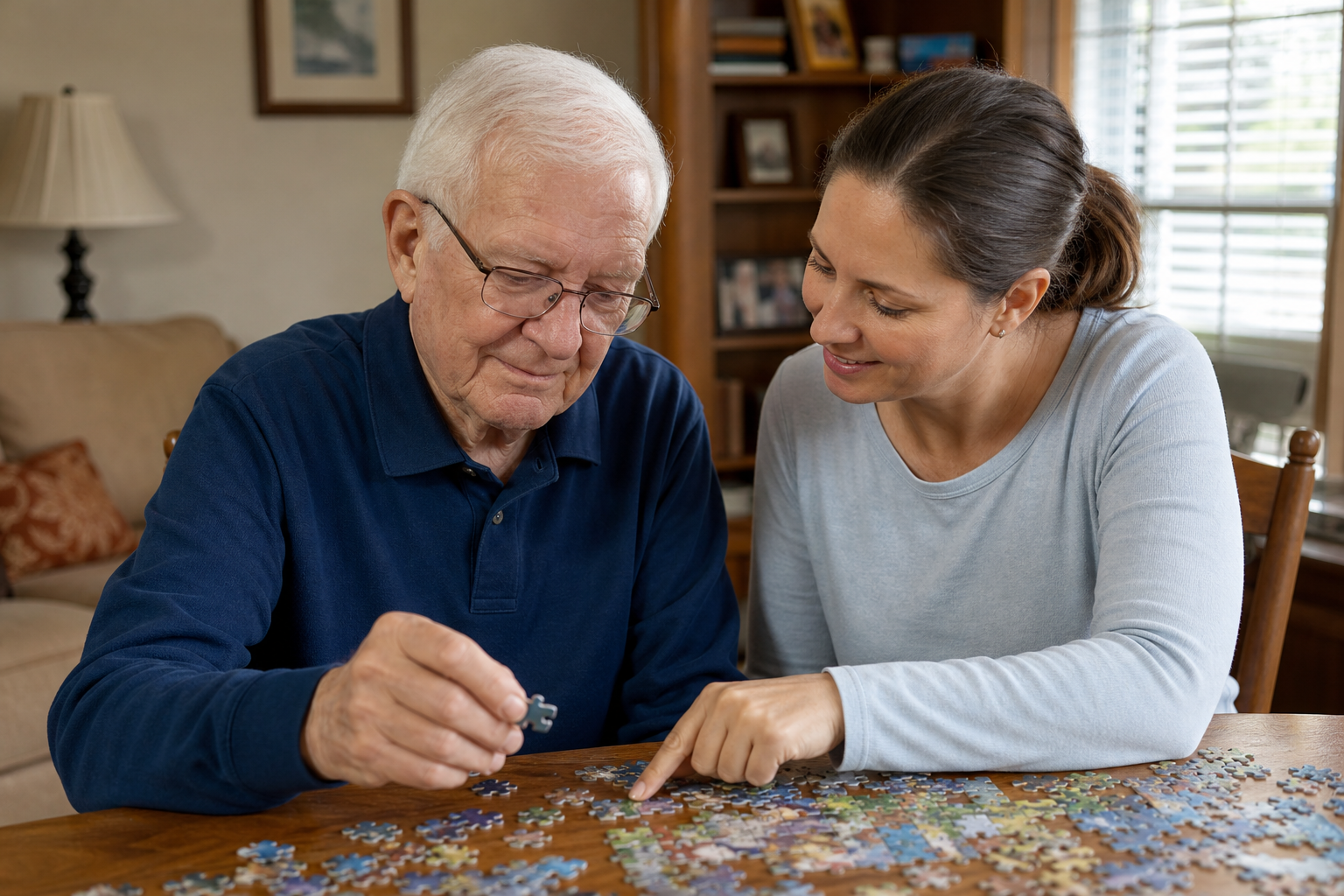
Patient, familiar routines support seniors with memory loss.
In-Home Care vs. Assisted Living
Both options provide help with daily life. The difference is where and how. In-home care brings one-to-one attention to a familiar place, while assisted living offers a shared residential community.
Neither is better for everyone. For a deeper comparison, read about the differences between in-home care and assisted living. Notably, caregivers can also support clients who already live in retirement communities or assisted living.
Signs It Is Time for Elder Care at Home
Many families wait too long. Watch for these signals:
- Missed medications or unopened mail and bills.
- Weight loss, spoiled food or an untidy home.
- Falls, near-falls or unsteady walking.
- Withdrawal, loneliness or changes in mood.
- A family caregiver who is exhausted or stretched thin.
How to Arrange Aged Care at Home
A clear process keeps the decision calm. Follow these steps:
- List the daily tasks that have become difficult.
- Talk openly with your loved one about preferences and concerns.
- Book a free, no-obligation care assessment.
- Review the personalized care plan and caregiver match.
- Start care, share feedback and adjust as needs change.
Paying for Aged Care and Medicare Questions
Cost is often the first worry. Original Medicare generally does not pay for long-term non-medical personal care, according to Medicare.gov. Consequently, families often use private funds, long-term care insurance or other programs.
Funding Options to Explore
- Private pay: flexible, with no eligibility rules.
- Long-term care insurance: check the policy for home care benefits and waiting periods.
- Veterans benefits: some veterans and spouses may qualify for aid.
- State and local programs: Medicaid waiver and caregiver support programs vary by state and income.
Check your policy and local resources, such as those listed by the Administration for Community Living. Your local Area Agency on Aging can also explain what is available.
Aged Care Across Seattle, Tacoma and Bellevue
Comfort At Home Homecare is a non-medical homecare agency based in Edmonds, Washington. It serves King, Snohomish, Pierce and Kitsap counties, including Seattle, Tacoma, Bellevue, Lynnwood, Auburn, Federal Way, Woodinville and Issaquah. Care plans are personalized, and families take part in the process. See the Seattle location page for local details.
Next step: Schedule a free, no-obligation care assessment or call (206) 258-6848. Toll free: (877) 752-8548.
Frequently Asked Questions About Aged Care at Home
What does aged care include?
Aged care covers the daily support older adults need, such as personal care, meals, housekeeping, medication reminders, transportation and companionship. It can be delivered at home or in a community setting.
Is aged care the same as nursing home care?
No. Aged care is a broad term. Non-medical home care helps with daily living in the senior's own home, while nursing homes are residential facilities.
When should a family consider aged care?
Consider it when daily tasks become difficult, falls or missed medications occur, or family caregivers feel stretched thin. Starting early often makes the change smoother.
What is non-medical home care?
Non-medical home care provides help with daily activities and companionship rather than clinical treatment. Examples include bathing, dressing, meal preparation and rides to appointments.
Does Comfort At Home Homecare offer live-in or 24/7 care?
Yes. Live-in care and 24/7 care are available when a client needs round-the-clock support. Call (206) 258-6848 to discuss your situation.
Can aged care support someone with dementia?
Yes. Memory care supports people with Alzheimer's, dementia and other memory disorders with routine, patience and safety awareness.
Which areas does Comfort At Home Homecare serve?
It serves King, Snohomish, Pierce and Kitsap counties in Washington. Communities include Seattle, Tacoma, Bellevue, Edmonds, Auburn, Federal Way, Lynnwood, Woodinville and Issaquah.
How does a free care assessment work?
A care professional learns about the senior's needs, routines and preferences, and the family's goals. There is no obligation, and the information shapes a personalized care plan.
Will Medicare pay for aged care at home?
Original Medicare generally does not cover long-term non-medical personal care. Options such as long-term care insurance or private pay may apply, so confirm details with your plan or Medicare directly.
Can caregivers help with transportation and medication reminders?
Yes. Caregivers can drive clients to medical appointments and errands and provide medication reminders. They do not provide medical care.
What is the difference between in-home care and assisted living?
In-home care brings support to the senior's own residence, while assisted living is a residential community. Home care lets seniors keep familiar surroundings and one-to-one attention.
What is a common mistake when arranging aged care?
Waiting for a crisis is the most common one. Planning early gives the senior a voice in choosing care and gives the family time to compare options.
Conclusion
Good aged care at home protects independence, supports daily routines and keeps families close. Non-medical care offers personal care, memory support, meals, rides and companionship in a place your loved one already knows. To explore the right fit, contact Comfort At Home Homecare for a free care assessment.
