Care Personal Care: What Home Care Covers and Costs
Care personal care explained: bathing, dressing, toileting and mobility help at home. Learn what it covers and book a free care assessment today.
Care personal care is hands-on, non-medical help with daily routines such as bathing, dressing, grooming, toileting and moving safely around the home. For many seniors, it is the support that makes staying in their own home possible. This guide explains what it includes, how to start, and what to ask before you choose a provider.
Quick answer: Personal care means respectful help with the activities of daily living. It is not nursing. A caregiver supports your loved one's independence, safety and dignity, usually in their own home.
What Is Care Personal Care?
Care personal care is non-medical assistance with the basic tasks of daily life, often called activities of daily living. It covers the intimate tasks that become difficult with age, disability or illness.
It differs from medical care. A personal care aide does not perform clinical procedures. Instead, the aide offers steady, friendly help so your loved one feels clean, comfortable and safe.
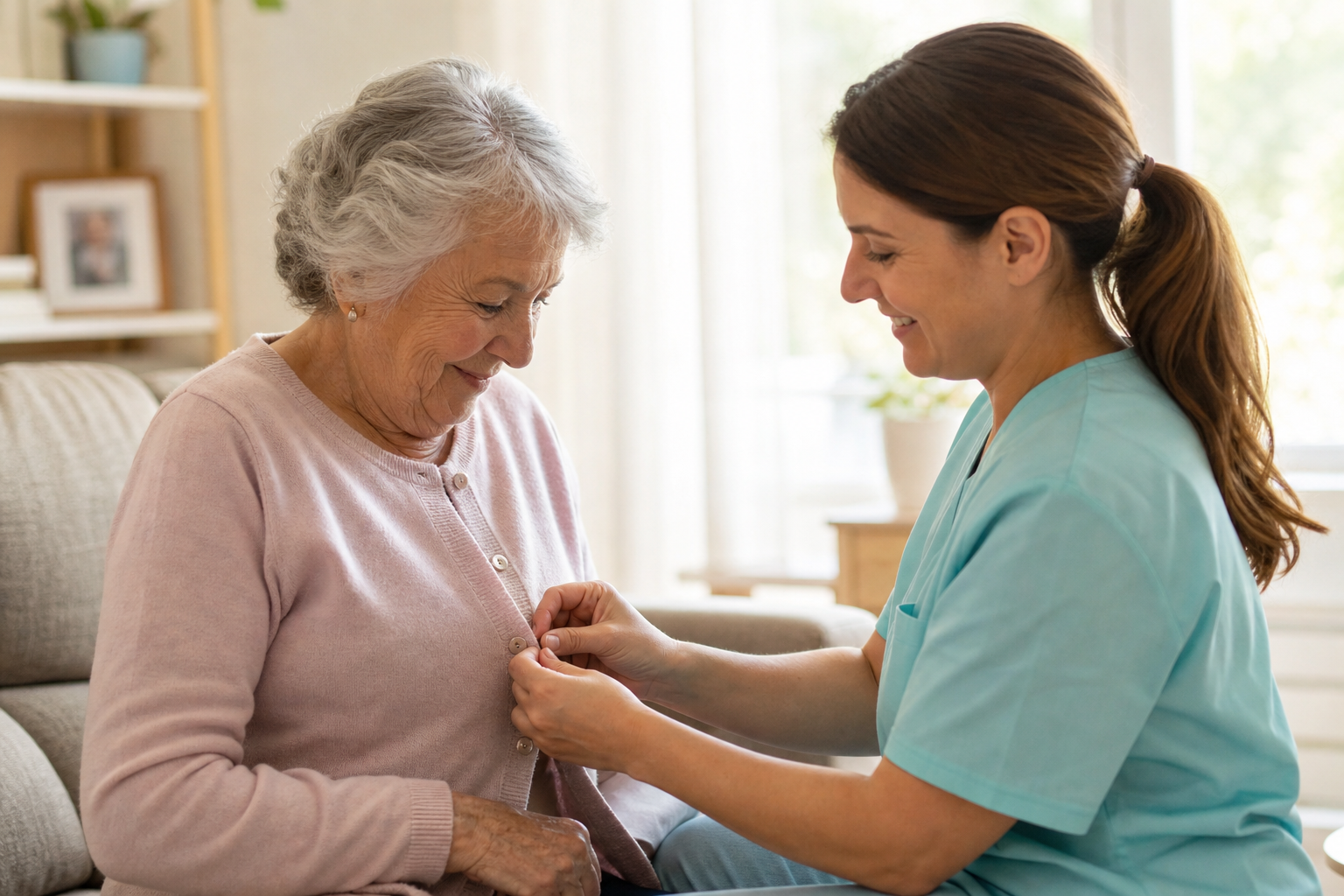
A caregiver offers gentle dressing help, a core part of care personal care.
What Personal Care Services Usually Include
Every plan is different. However, most personal care at home includes the following tasks:
- Bathing and grooming: showering, hair care, shaving and oral hygiene.
- Dressing: choosing outfits and helping with buttons, zippers and shoes.
- Toileting and incontinence care: discreet, respectful assistance.
- Mobility help: safe transfers, walking support and fall prevention.
- Everyday extras: meal preparation, light housekeeping, laundry and medication reminders.
Comfort At Home Homecare, a non-medical agency based in Edmonds, Washington, offers all of these. You can see the full range on its homecare for seniors page.
Signs Your Loved One May Need Help
Changes often appear slowly. As a result, families sometimes miss them. Look for these signals:
- Skipped baths or the same clothes worn for days.
- Unexplained bruises, near-falls or trouble standing up.
- Weight loss, spoiled food or a messy kitchen.
- Confusion about routines, which can point to memory loss.
If you notice two or more, a conversation is worth having. Our guide on caring for your aging loved one offers tips for starting it kindly.
Protecting Dignity and Independence
Good personal care never takes over. Instead, a caregiver lets your loved one do what they can and steps in only where needed. This approach keeps confidence high.
Privacy matters too. Caregivers should explain each step, keep the person covered and move at a comfortable pace. In addition, a consistent caregiver builds trust over time, which is especially valuable for people living with dementia.
How to Start Personal Care at Home: Step by Step
- Talk with your loved one about which daily tasks feel hardest and what they want to keep doing themselves.
- List the help needed with bathing, dressing, toileting, meals and mobility, and note the hardest times of day.
- Schedule a free assessment and invite family members so everyone shares the same expectations.
- Review the personalized care plan, including tasks, schedule and caregiver match.
- Begin with a few visits, check in often and adjust the hours as needs change.

A care assessment helps families shape a plan that fits their loved one.
Paying for Personal Care
Costs depend on the hours and level of support. Original Medicare generally does not pay for long-term non-medical personal care, according to Medicare.gov. Families often use private funds, long-term care insurance or state programs.
In Washington, one option is the state's COPES program. Read how it works in this article on COPES and affordable homecare. Eligibility rules apply, so confirm details with the state.
Choosing a Personal Care Provider in Puget Sound
Ask every agency these questions:
- Is the care non-medical, and is that clearly explained?
- Is the plan personalized, and are families involved?
- Can hours grow to live-in or 24/7 care if needed?
- Do caregivers have experience with memory loss, Parkinson's and arthritis?
- Is the first assessment free?
Comfort At Home Homecare serves King, Snohomish, Pierce and Kitsap counties, including Seattle, Tacoma, Bellevue, Edmonds and Lynnwood. Care can take place in private homes, retirement communities and assisted living settings. Bellevue families can read more about local home care in Bellevue and its impact on quality of life.
Ready to talk? Schedule a free, no-obligation care assessment or call (206) 258-6848. Toll free: (877) 752-8548.
Frequently Asked Questions
What is care personal care?
Care personal care is hands-on, non-medical help with daily activities such as bathing, dressing, grooming, toileting and mobility. It helps people stay safe and comfortable at home.
Is personal care the same as medical care?
No. Personal care is non-medical support with daily routines. Medical care, such as nursing, is provided by licensed clinicians and is a separate service.
What tasks does personal care include?
Typical tasks include bathing, dressing, grooming, toileting, incontinence care, fall prevention and help moving around the home. Many families add meals, laundry and medication reminders.
How do I know if my loved one needs personal care?
Warning signs include skipped bathing, wearing the same clothes, near-falls, weight loss and a messy home. Trouble with toileting or getting out of bed is another sign.
Can personal care help someone with dementia?
Yes. Caregivers can guide routines gently and patiently, which reduces stress. Memory care support is available for Alzheimer's, dementia and related conditions.
How often can a caregiver visit?
Schedules range from a few hours a week to live-in and 24/7 care. The right level depends on your loved one's needs and is set in a personalized care plan.
Will Medicare pay for personal care at home?
Original Medicare generally does not cover long-term non-medical personal care. Check Medicare.gov and ask about other options such as long-term care insurance or state programs.
How do I protect my parent's dignity during bathing?
Choose a caregiver who is respectful, explain each step, keep the person covered and let them do what they can. Consistent scheduling also builds trust.
What is a free care assessment?
It is a no-obligation visit or conversation to learn about daily routines, health needs, home safety and family goals. The findings shape a personalized care plan.
Can personal care be provided outside a private home?
Yes. Care can be delivered in private homes, retirement communities and assisted living settings.
What areas does Comfort At Home Homecare serve?
It serves the Puget Sound area of Washington, including King, Snohomish, Pierce and Kitsap counties. Communities include Seattle, Tacoma, Bellevue, Edmonds and Lynnwood.
What is a common mistake when starting personal care?
Waiting until after a fall or crisis. Starting with a few hours of help early often prevents injuries and lets your loved one adjust gradually.
Conclusion
Care personal care gives seniors respectful help with bathing, dressing, toileting and mobility, so they can remain independent at home. Start by talking openly, listing needs and requesting a personalized plan. To see what fits your family, call (206) 258-6848 or book a free, no-obligation assessment with Comfort At Home Homecare.
