Elder Care at Home: A Family Guide to Your Options
Elder care explained: compare in-home care types, learn what services help, and see how to start. Book a free care assessment today.

Elder care is the support that helps older adults live safely, comfortably, and with dignity when daily life becomes harder. For many families in the Puget Sound area, the most reassuring answer is premium care delivered at home, where cherished memories and familiar routines already live. This guide explains your options, the signs that care may be needed, how costs work, and how to take a first gentle step.
Quick answer: Elder care covers help with daily tasks, safety, health routines, and companionship. Non-medical home care is a popular choice because your loved one stays in a familiar place while a trained caregiver helps with bathing, meals, reminders, errands, and friendly conversation.
What Is Elder Care?
Elder care is a broad term for services that support older adults with daily living and overall well-being. It can happen at home, in a retirement community, or in assisted living. The right mix depends on health, mobility, memory, and personal wishes.
Notably, elder care is not only about tasks. Loneliness and low mood affect many seniors, so human connection matters as much as a tidy kitchen or a ride to an appointment.
Companionship is a core part of elder care at home.
Signs It May Be Time for Senior Care
Changes often arrive slowly. As a result, families may miss them until a fall or a scare. Watch for these signals:
- Missed medications or confusion about doses
- Weight loss, spoiled food, or skipped meals
- Unwashed laundry, clutter, or a neglected home
- Trouble with bathing, dressing, or getting around
- Unexplained bruises or recent falls
- Withdrawal, low mood, or forgetting familiar things
- Unopened mail or missed bills
- A family caregiver who feels exhausted
If several of these sound familiar, a conversation is worth having soon. Early planning gives your family more choices and far less stress.
Why Emotional Well-Being Matters in Elder Care
Sadness can build quietly after surgery, illness, reduced activity, or the loss of someone dear. A kind, consistent caregiver offers conversation, shared activities, and a reason to look forward to the day. In addition, that steady presence helps you notice changes in mood early.
Types of In-Home Elder Care
Home care can be shaped to fit the person. Comfort At Home Homecare, a non-medical agency based in Edmonds, Washington, offers several formats.
Visiting Care and Adult Day Care
Visiting care brings a caregiver for a few hours at a time. Adult day care offers a social setting during the day. Both can give family caregivers a needed break.
Live-In and 24/7 Care
Some people need support through the night as well. Live-in and 24/7 care provide a steady presence, which can ease fall risk and anxiety. You can read more on the agency's home care services page.
Memory Care
Dementia care works best with patience, routine, and familiar surroundings. Learn how memory care at home supports people with Alzheimer's and related conditions. Mentally stimulating activities such as card games, crafts, storytelling, and talking about current events can also help keep minds active.
Respite Care for Family Caregivers
Family caregivers need rest too. A professional caregiver can step in so you can work, attend to your own health, or simply recharge, knowing your loved one is in capable, caring hands.
Everyday Elder Care Services That Make a Difference
| Need | How a caregiver helps |
|---|---|
| Personal care | Bathing, dressing, grooming, toileting, incontinence care, mobility help |
| Homemaking | Light housekeeping, laundry, grocery shopping |
| Meals | Meal preparation and healthy routines |
| Reminders and rides | Medication reminders and transportation to appointments and errands |
| Companionship | Conversation, games, walks, outings, and social connection |
Because these services are non-medical, they focus on comfort and daily living rather than clinical treatment. For a wider overview, see this page on homecare for seniors.
Health Benefits of Staying Active and Engaged
Gentle activity supports both body and mind. A caregiver can walk with your loved one, garden together, or share a favorite hobby. Therefore, daily life stays active, social, and purposeful.
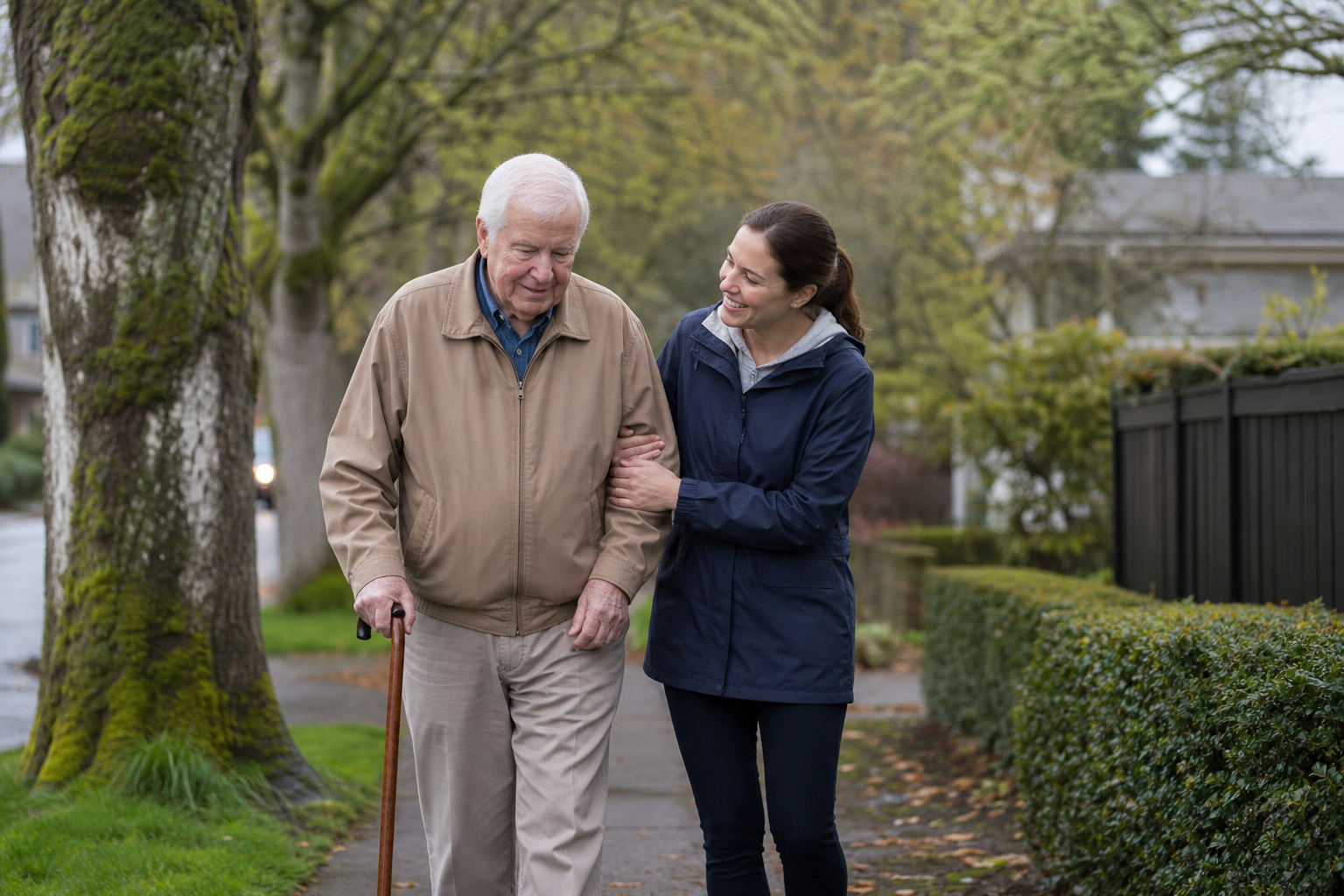
Mobility help and fresh air support independence in elder care.
Home Care vs. Assisted Living
Both can be good choices. However, they suit different people. Home care keeps your loved one in a familiar space with one-to-one attention. Assisted living offers a community setting with shared services.
In-home care often appeals to people who value independence and routine. Our article on the differences between in-home care and assisted living walks through the trade-offs. Notably, caregivers can also work inside retirement communities and assisted living settings.
How to Start Elder Care: Step by Step
- List the daily tasks your loved one finds hard, such as bathing, cooking, or getting to appointments.
- Talk openly with them about preferences and worries, and listen before you suggest solutions.
- Schedule a free care assessment with an agency so a care professional can understand the home and routines.
- Review the personalized care plan together as a family and ask questions about every detail.
- Start small, check in often, and adjust the plan as your loved one's needs change over time.
For tips on balancing support with respect, read this guide to caring for your aging loved one.
Paying for Senior Care and Medicare
Cost is a top worry. Original Medicare generally does not pay for long-term custodial care, which is help with daily activities. You can review current rules at Medicare.gov. In addition, the federal Administration for Community Living points families toward aging resources. Ask any agency about private pay and other options before you decide.
Choosing a Home Care Provider in Puget Sound
Look for personalized plans, family involvement, and caregivers who treat clients with respect. Ask how quickly the agency responds and whether it offers a no-obligation assessment. Comfort At Home Homecare serves King, Snohomish, Pierce, and Kitsap counties, including Seattle, Tacoma, Bellevue, and Edmonds. Its stated values are independence, human connection, and comfort. You can call (206) 258-6848 to schedule a free assessment.
Questions to Ask Before You Choose
- How are caregivers matched to each client?
- How quickly can care begin?
- How does the agency keep families informed?
- What happens if a caregiver is unavailable?
Frequently Asked Questions About Elder Care
What does elder care include?
Elder care includes help with daily living, safety, and companionship for older adults. At home, that can mean bathing, meals, housekeeping, medication reminders, and transportation.
Is elder care the same as nursing home care?
No. Elder care is a broad term. A nursing home is one setting, while non-medical home care lets a person stay in their own residence with support.
When should my family start looking into elder care?
Start when daily tasks become hard, safety worries grow, or caregivers feel worn out. Planning early gives you more choices and less stress.
What is the difference between home care and assisted living?
Home care brings support to the person's own home. Assisted living is a residential community where the person moves in and receives help there.
Do you provide 24/7 or live-in elder care?
Yes. Comfort At Home Homecare offers live-in care and 24/7 care when a person needs round-the-clock support.
Can elder care help someone with dementia or Alzheimer's?
Yes. Memory care supports people with Alzheimer's, dementia, and other memory disorders with patient, consistent routines and companionship.
Will Medicare pay for elder care at home?
Original Medicare generally does not cover long-term non-medical custodial care. Check Medicare.gov and ask your agency about other payment options.
How does a free care assessment work?
A care professional learns about your loved one's needs, home, and routines at no cost and with no obligation. You then receive a personalized care plan to consider.
What are common mistakes when choosing elder care?
Common mistakes include waiting for a crisis, skipping your loved one's input, and choosing a one-size-fits-all plan. Comparing options and asking questions helps avoid them.
Can caregivers help with medication reminders and transportation?
Yes. Non-medical caregivers can remind clients to take medications and drive them to medical appointments and errands.
Which areas does Comfort At Home Homecare serve?
The agency serves King, Snohomish, Pierce, and Kitsap counties in Washington, including Seattle, Tacoma, Bellevue, and Edmonds.
How can families stay involved in elder care?
Families can join care planning, review the plan regularly, and stay in touch with caregivers. Family-centered care keeps loved ones informed and included.
Conclusion
Good elder care starts with listening. Identify daily needs, involve your loved one, compare home care with other settings, and plan for costs early. A personalized, family-centered approach can protect independence, comfort, and connection. To explore elder care for someone you love in the Puget Sound area, schedule a free, no-obligation assessment or call (206) 258-6848.
